How to Prepare Your NYC Apartment for Bed Bug Treatment
Proper preparation is one of the most important factors in whether a bed bug treatment succeeds or fails. This guide covers what to do before heat treatment, what to do before chemical treatment, what to avoid, and the most common preparation mistakes NYC residents make.
When bed bug treatment fails or requires repeat visits beyond what was planned, inadequate preparation is one of the most common causes. A thorough treatment applied to a poorly prepared space produces a partial result. Understanding what your treatment method requires — and what it does not — removes the uncertainty and gives you the best chance of eliminating the infestation in as few visits as possible.
The preparation requirements for heat treatment and chemical treatment are different. They are also frequently misunderstood. Read the full guide for your treatment method and follow the checklist we provide at your scheduling call.
Preparing for Heat Treatment
Heat treatment works by raising the temperature in the treated space above 120 degrees Fahrenheit and holding it there long enough to kill all bed bug life stages, including eggs. The preparation requirements for heat treatment are less disruptive than for chemical treatment because heat penetrates everywhere — inside drawers, inside closets, inside furniture, through walls — without you having to move or bag those items.
Remove from the space before heat treatment:
- Candles and wax-based items, which will melt
- Aerosol cans, pressurized containers, and lighters, which may expand or burst
- Medications, vitamins, and medical devices
- Vinyl records, which may warp
- Artwork, photographs, and items with significant sentimental value that you are not willing to risk at high temperatures
- Perishable food and opened beverages
- All pets, plants, and fish tanks (heat and reduced humidity are harmful to animals and plants)
- Laptop computers and tablets, which may be damaged by sustained heat exposure
You do NOT need to do the following before heat treatment:
- Wash, bag, or box your clothing or bedding — heat treats inside drawers and closets
- Move or disassemble furniture — leave everything in place so heat circulates properly
- Discard your mattress, box spring, or furniture
- Vacuum before treatment
- Remove books, papers, or non-vinyl household items
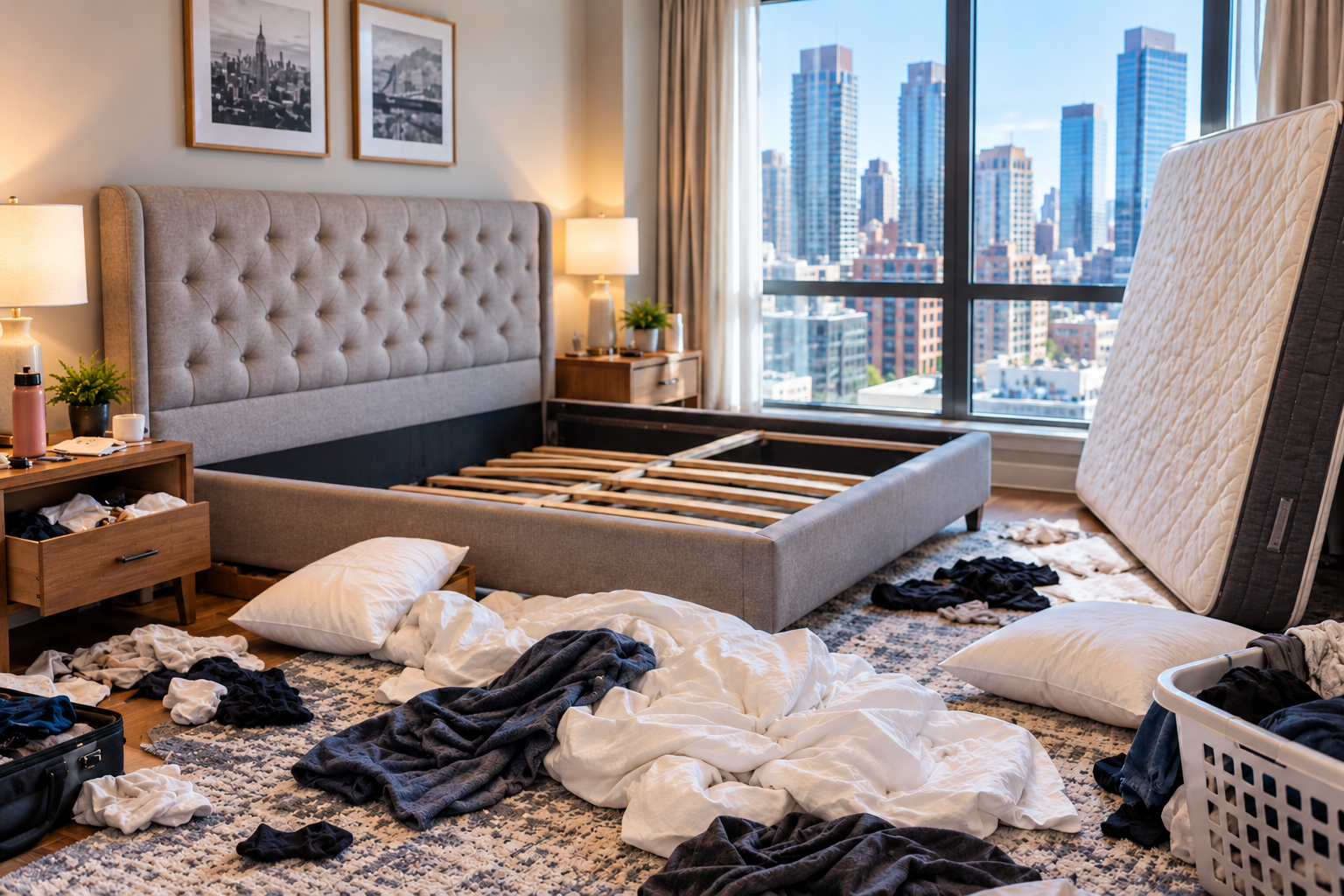
Do not begin moving furniture around or redistributing items from the bedroom into other rooms of the apartment in the days before heat treatment. This is one of the most common preparation mistakes, and it has a predictable consequence: you scatter bed bugs into areas where they were not previously established, expanding the infestation zone and potentially requiring treatment of additional spaces.
Preparing for Chemical Treatment
Chemical treatment requires more preparation than heat treatment because the insecticide cannot penetrate inside sealed items. Everything in an infested area that can be treated by washing, drying on high heat, or sealing must be handled before we arrive. An improperly prepared space for chemical treatment creates protected refuges where bed bugs survive and continue to reproduce after treatment.
Before chemical treatment:
- Wash all bedding, pillowcases, sheets, and mattress covers on the hottest water setting and dry on high heat for at least 30 minutes. Place immediately in sealed plastic bags. Do not return them to the bed until after treatment.
- Remove all clothing from bedroom closets and dressers. Wash and dry on high heat or place in sealed bags if you know items are not infested. Do not pile clothing on the floor or on furniture — bag it and move it out of the treatment area.
- Vacuum all mattresses and box springs thoroughly, paying attention to seams and tufts. Immediately seal the vacuum bag in a plastic bag and dispose of it outside the unit. Use a brush attachment if available.
- Pull all furniture at least 12 to 18 inches away from walls so we can access the baseboard treatment area without moving furniture during treatment.
- Clear under beds completely. Nothing should be stored under the bed on treatment day.
- Clear the interior of closet floors in the bedroom and any adjacent rooms being treated.
- Remove items from nightstand drawers so we can treat interior surfaces.
- Remove items from under bathroom and kitchen sinks if those areas are being treated.
Common chemical treatment preparation mistakes:
- Vacuuming and then leaving the full vacuum bag inside the apartment or in a bag that is not sealed — bed bugs inside the bag will survive and re-infest
- Moving bedroom items into other rooms and then failing to disclose this to the technician — treated rooms become reinfested from items moved to untreated areas
- Discarding the mattress or box spring without properly wrapping and sealing it — dragging an infested mattress through a building hallway is a violation of NYC sanitation guidelines and spreads the infestation
- Shampooing carpets before treatment — wet carpets reduce the effectiveness of residual insecticide and should not be cleaned for at least two weeks after treatment
- Applying over-the-counter bed bug sprays in the days before professional treatment — this alerts bed bugs and drives them deeper into harborage points, making them harder to reach
Pets and Children
For heat treatment, all pets including fish and reptiles must be removed before treatment begins. The temperature and low humidity of heat treatment are harmful to animals. Fish tanks must be covered and the pump running if the tank stays, but ideally tanks are moved out of the treated space entirely since sustained temperature changes stress aquatic animals.
For chemical treatment, all pets and children must be out of treated areas until the applied products are completely dry, typically four to six hours. We advise you of the exact re-entry time on treatment day. Do not allow pets to lick treated surfaces until the treatment has dried.
After Treatment
After chemical treatment, do not vacuum treated surfaces for at least 72 hours. Do not shampoo carpets or mop floors for at least two weeks. Begin vacuuming daily after 72 hours — this is important, as the vibration from vacuuming triggers dormant pupal fleas and emerging bed bugs to contact the residual treatment. Continue daily vacuuming for two weeks minimum.
After heat treatment, the space can be used normally as soon as temperatures return to safe levels. Ventilate before re-entry if any chemical residue was applied in addition to heat.
For the full treatment process walkthrough, see our treatment process page. For heat treatment specifics, see our heat treatment page. The EPA provides additional bed bug preparation guidance consistent with the approach we use.